Employee policies
TimeOff.Management lets you fine‑tune access and feature settings for each employee. Policies are available from the main screen under Policies.
- Access to reports
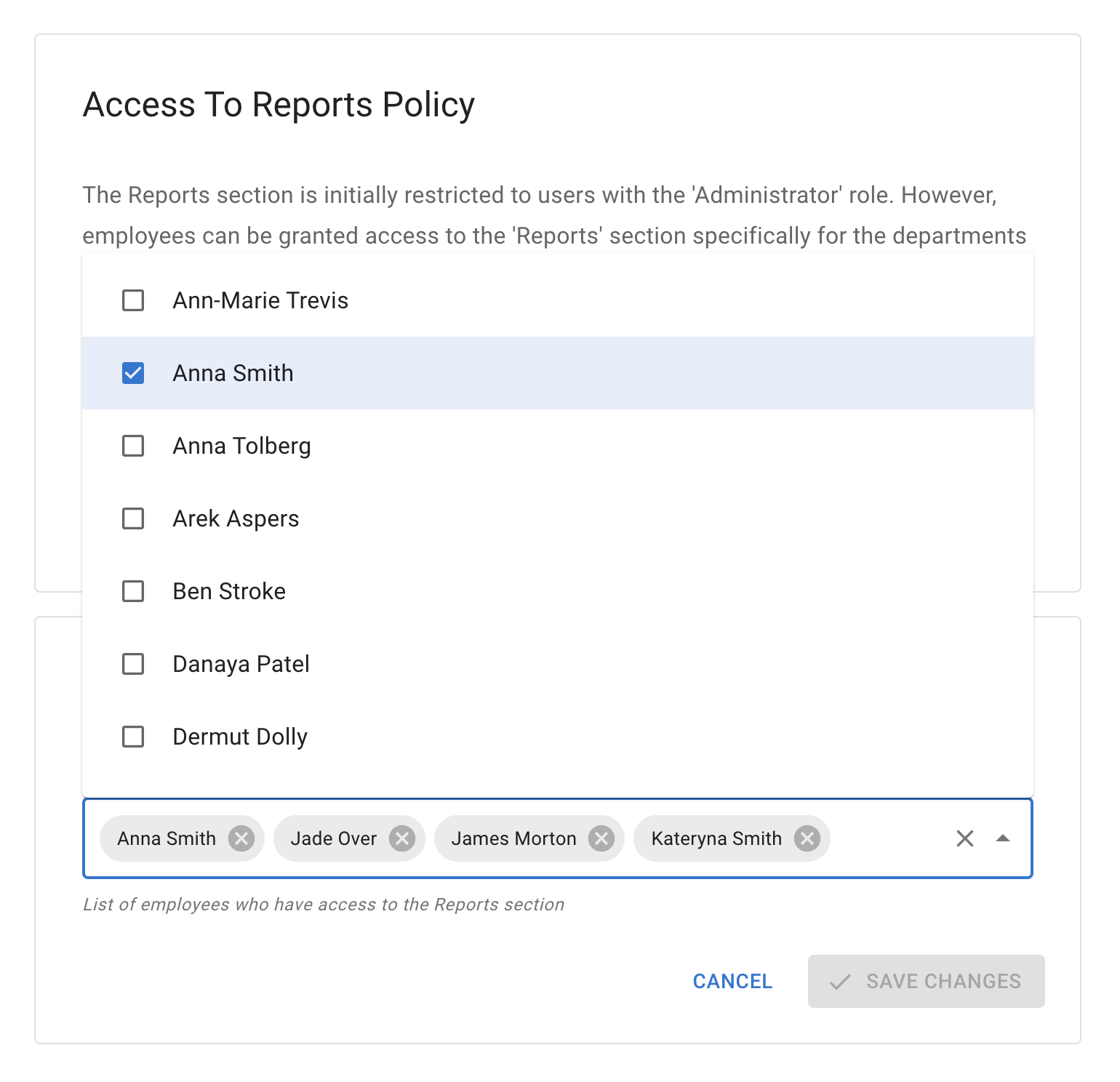
Grant selected employees access to the Reports section for departments where they are an Employee, Approver, or Secondary Approver. Admins retain full access. Assign in the policy editor; you can modify or revoke anytime.
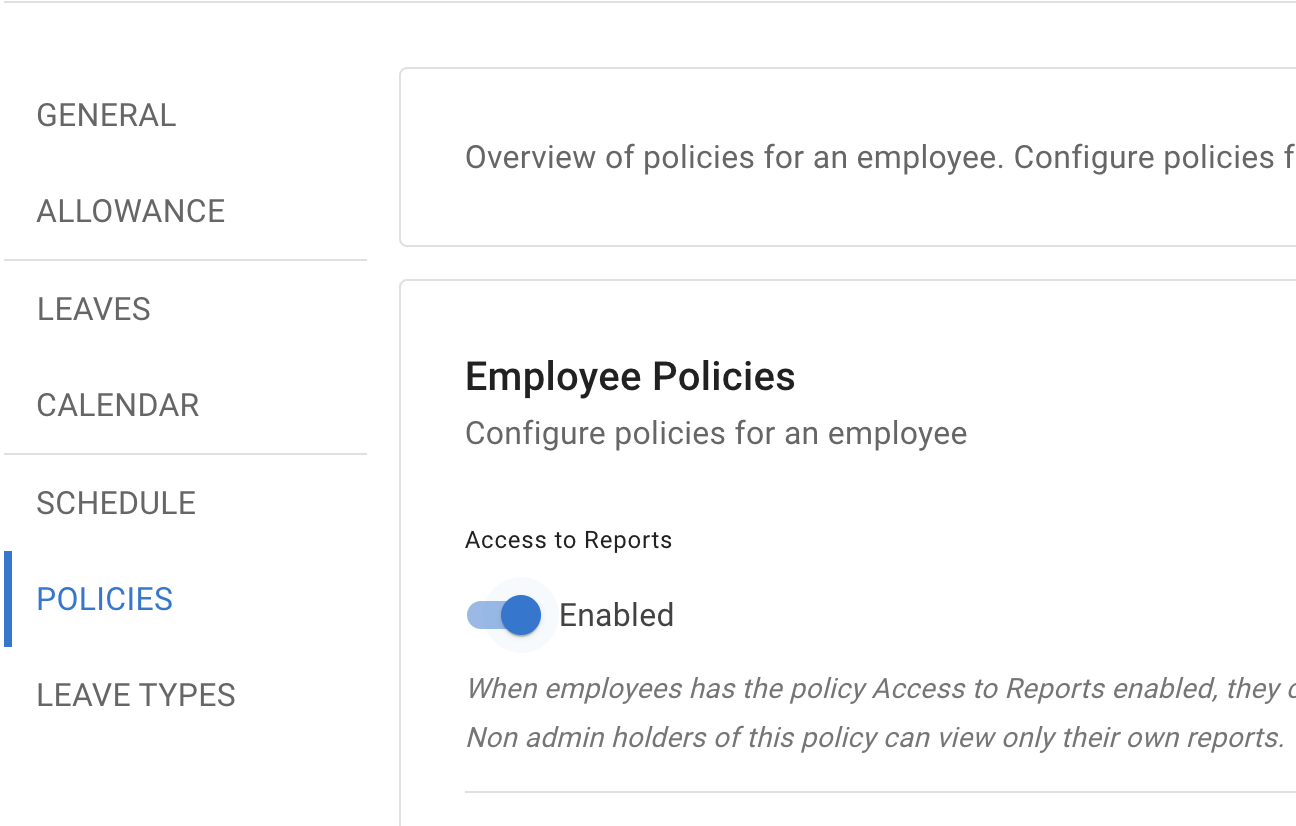
This can also be assigned in Employee details → Policies tab.
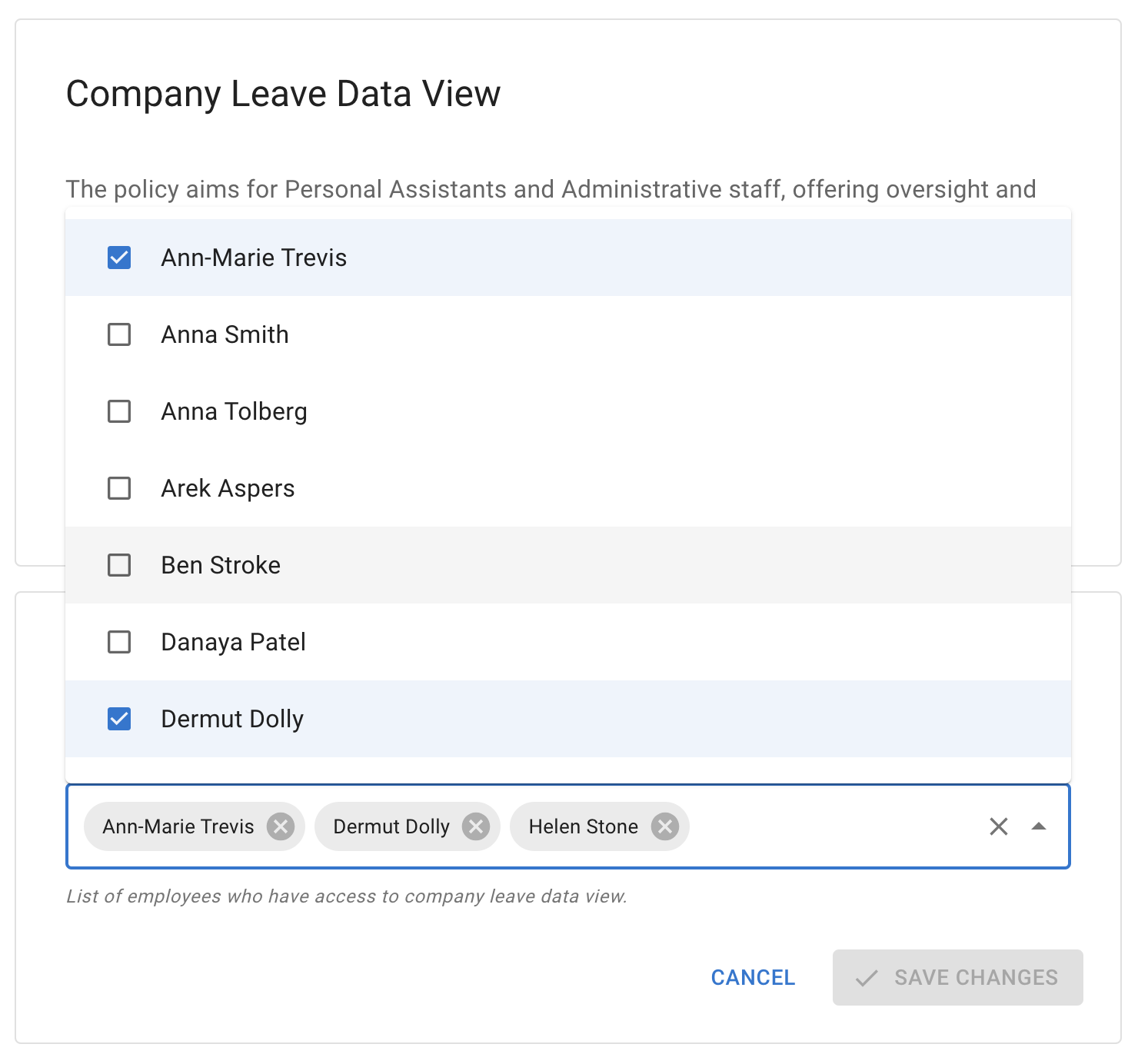
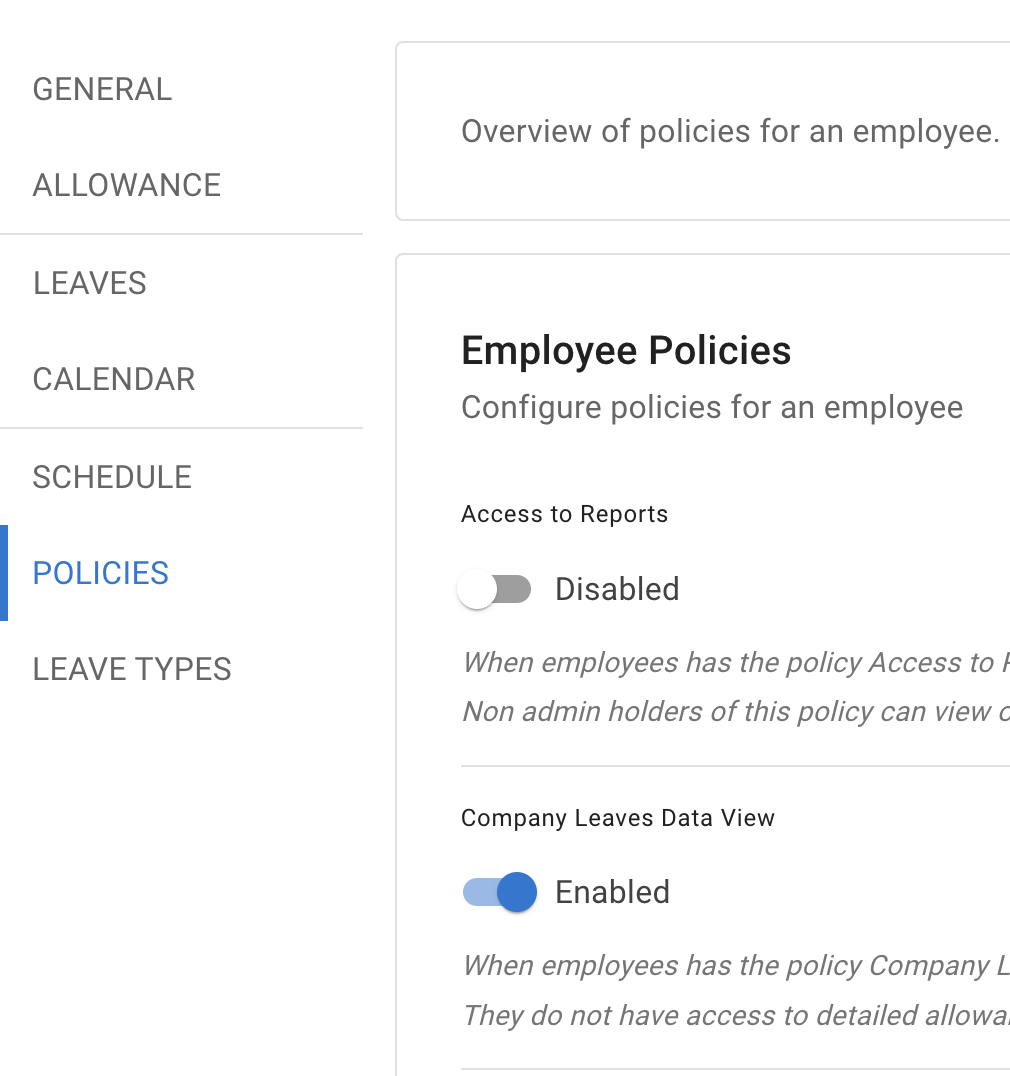
- Company Leave Data View
Provide selected employees (e.g., PAs, admins) access to Team View and individual calendars across all departments for coordination. Assign in policy editor or in Employee details → Policies tab.
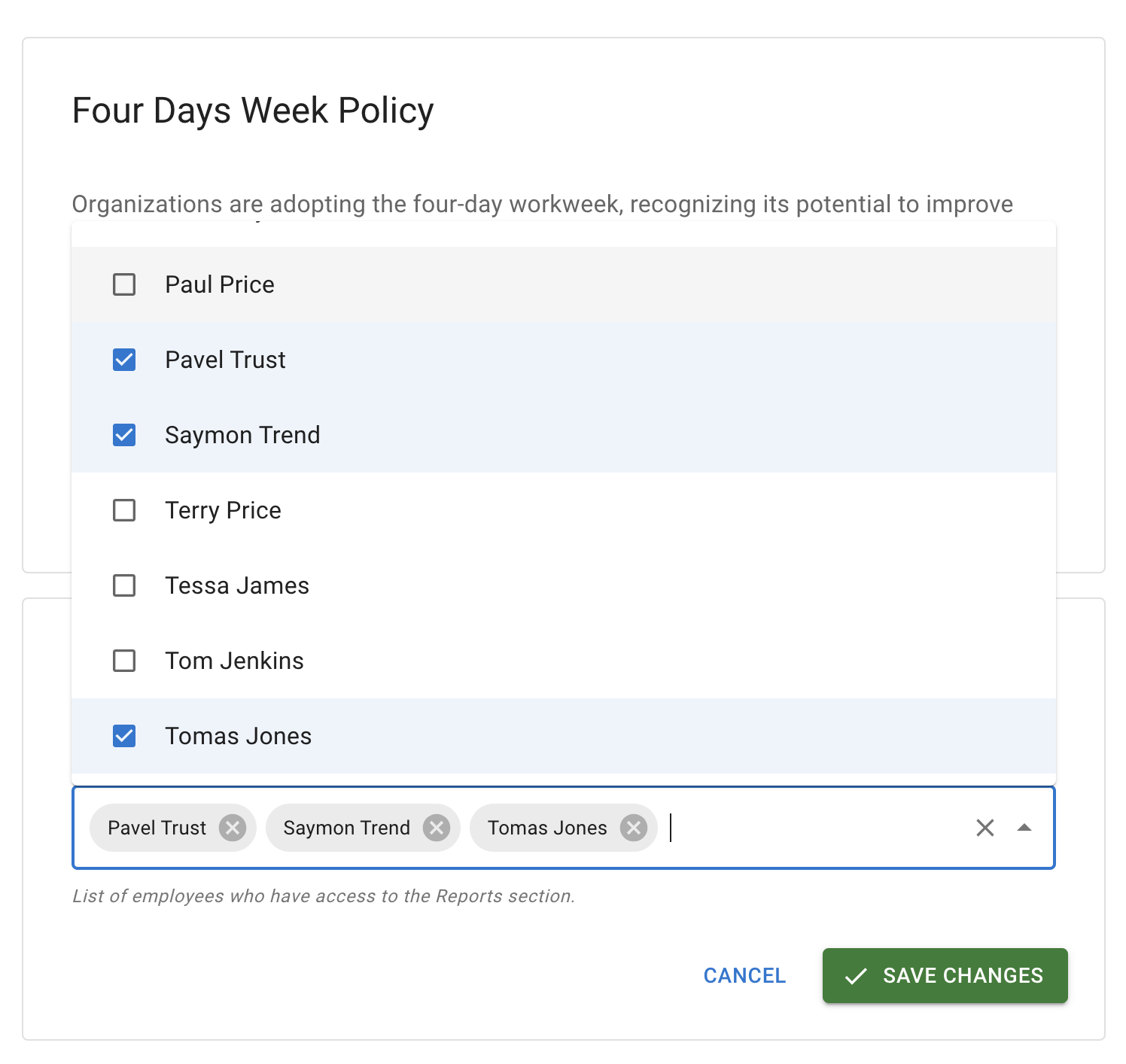
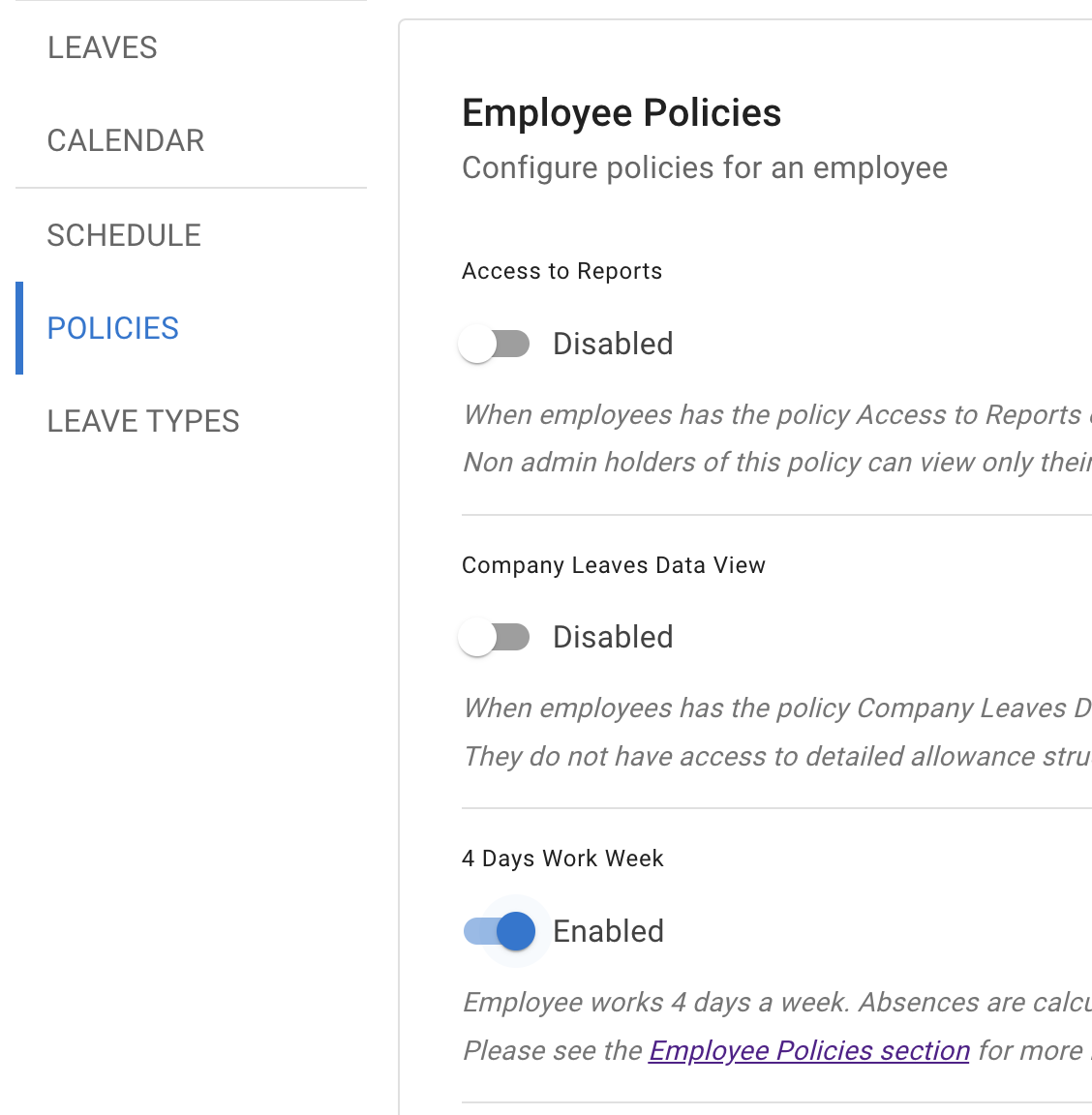
- Four days week
Assign a 4‑day workweek policy. A 1.25 coefficient automatically adjusts absence durations for affected employees. When revoking access, rebook any future‑dated leaves that were booked under the policy to remove the 1.25 coefficient effect.
- Tenure Based Allowance
Automatically increase allowance based on start date and configured bands. Each band adds to the base allowance (not cumulative). Only the last applicable band applies.
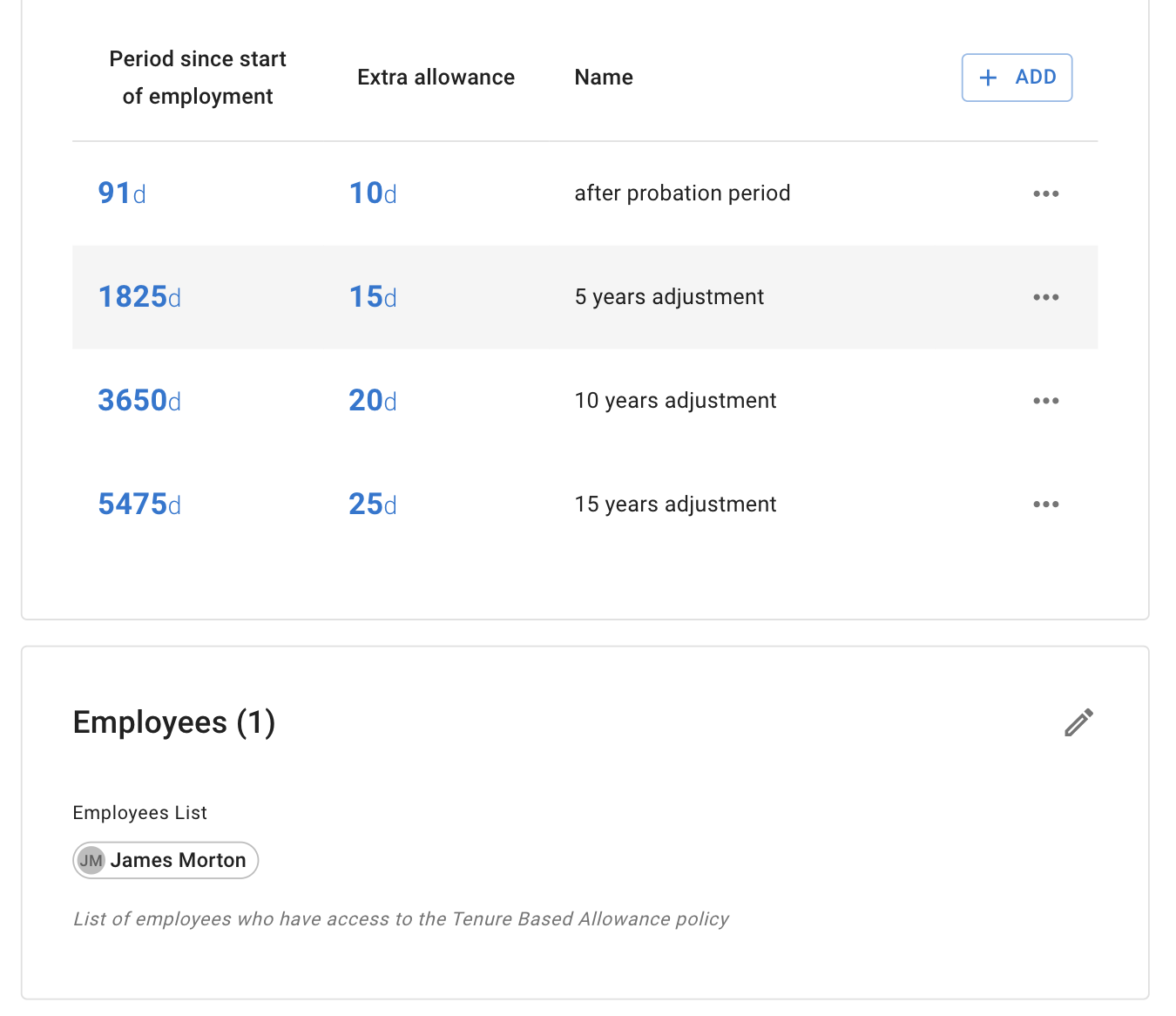
Ensure starting allowance is 0 before bands apply:
- Individual: Employee → Allowance → Override department allowance → 0
- Department: Settings → Departments → Set allowance to 0 days
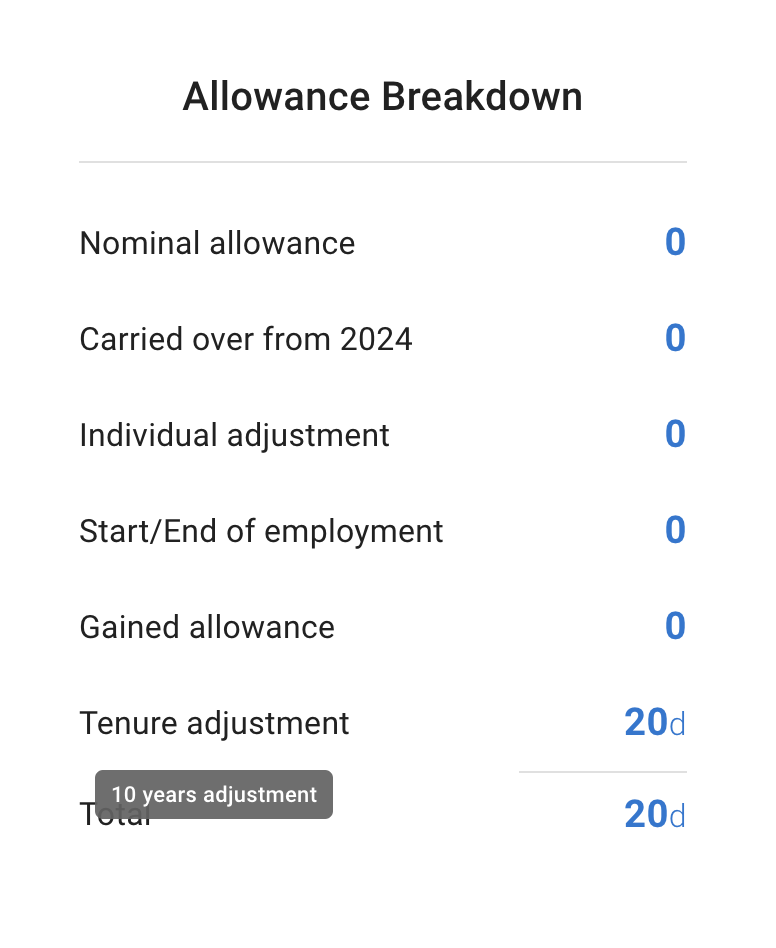
The system moves employees between bands automatically when milestones are reached. Example allowance view after 10 years:
- Restrict absence overlap
Define groups that can’t all be off simultaneously. Options:
- At most one employee absent
- At least one employee present
Choose which leave types the rule affects.
- Employee Management Roles
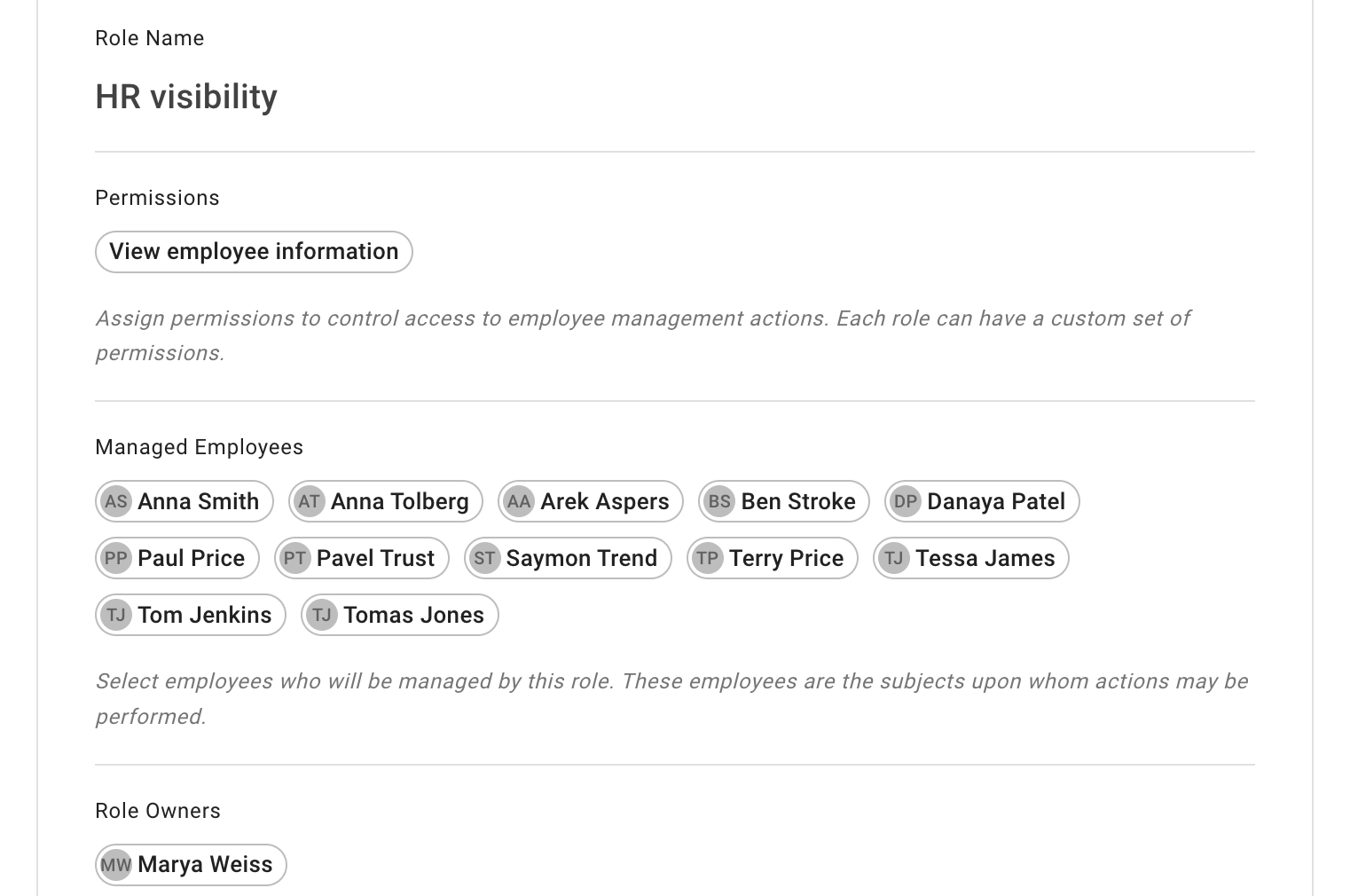
Assign management permissions (view, add, edit, delete) for selected employee groups without full admin rights. Example: allow HR to view employee data by creating a role and adding employees; assign the HR team member as Role Owner.