Leave types
Leave types help you track different kinds of time off in TimeOff.Management.
You can use them for holidays, sick leave, working from home, unpaid leave, overtime, TOIL, study leave, parental leave, or any other absence type your business needs.
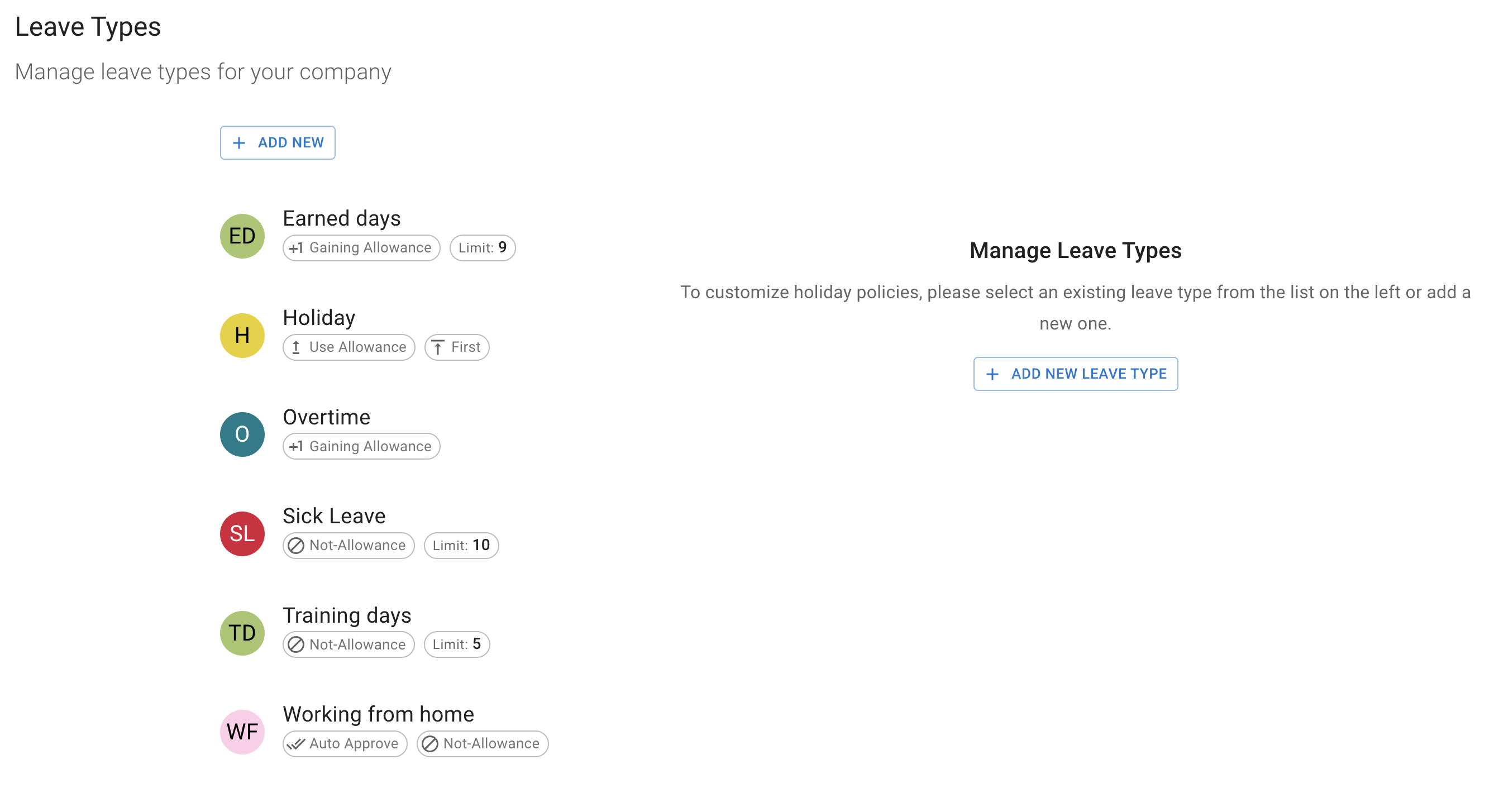
To manage leave types, open General settings → Leave types.
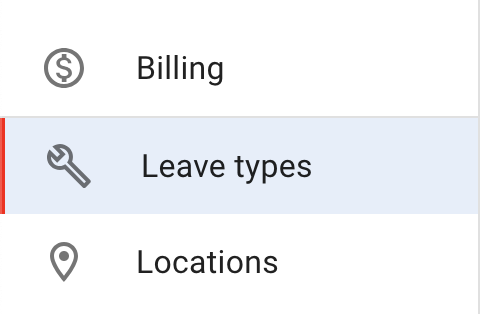
You’ll see the list of all leave types. From here, you can edit existing leave types or add new ones.
What you can set for each leave type
Each leave type can be customised to match the way your company manages time off.
You can set:
-
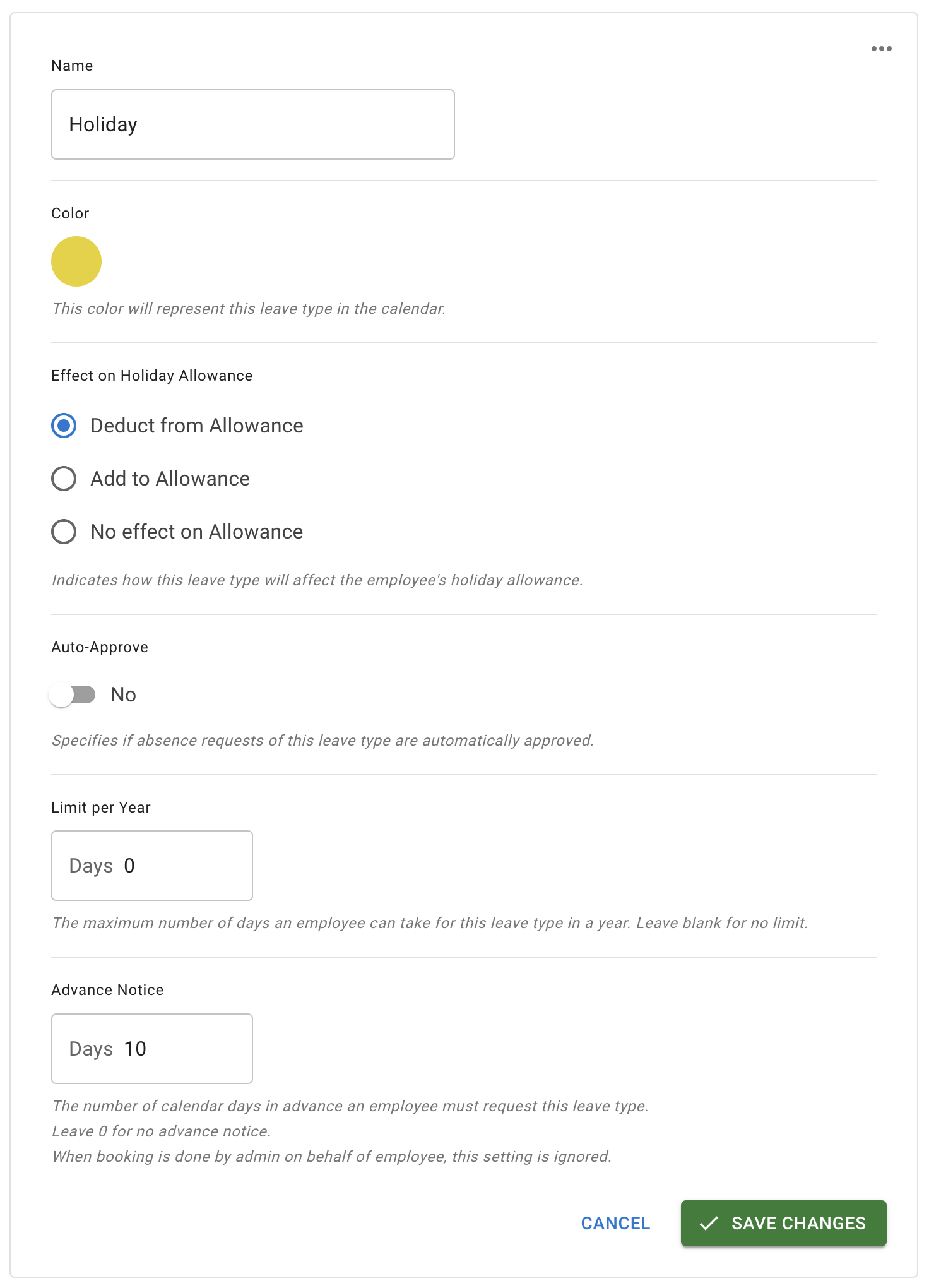
Name The name employees will see when booking leave.
-
Colour The colour shown on the calendar.
-
Effect on allowance This controls how the leave type affects employee allowance.
-
Deduct from allowance Use this for paid holiday or any leave that should reduce the employee’s balance.
-
Add to allowance Use this for leave types that add time back to the employee’s balance, such as overtime or TOIL.
-
No effect Use this when the leave should be tracked but should not change allowance, such as working from home or unpaid leave.
-
-
Auto approve Requests for this leave type are approved automatically. This is useful for leave types that do not need manager approval.
-
Limit Set the maximum number of days per year for this leave type. This is often used for sick leave, unpaid leave, or other leave types that do not deduct from the main holiday allowance.
-
Advance Notice Set how many days in advance this leave type can be booked.
For example, if you set 10 days for holiday, employees can only book that leave type at least 10 days before the start date.
Admins can override this rule. This means an admin can book leave on behalf of an employee at any time.
Read more: Advance notice for booking leave requests
Control who can use each leave type
By default, leave types can be managed from the global leave type list.
This works well when the same leave types apply to everyone in the company.
If different teams need different leave types, use Leave access in Employee policies.
Leave access lets you create groups of leave types and assign them to:
- selected employees
- departments
- locations
This is useful when some leave types should only be available to certain people.
For example:
- Study leave may only apply to one department.
- A local leave type may only apply to one location.
- Senior managers may need leave options that other employees do not use.
The global leave type list acts as your main storage area. You create the leave type once, then add it only to the policies where it is needed.
Read more: Employee policies - Leave access
Hide leave type details on Team View
Some leave types may be sensitive.
For example, you may not want everyone to see if a person is off sick, on unpaid leave, or using another private leave type.
You can hide leave type details on Team View.
When this setting is enabled, employees can still see that someone is off, but they cannot see the reason. The absence appears in grey instead of showing the leave type colour.
Admins and supervisors can still see the full leave details.
Read more: Team View leave data privacy options
Leave type actions
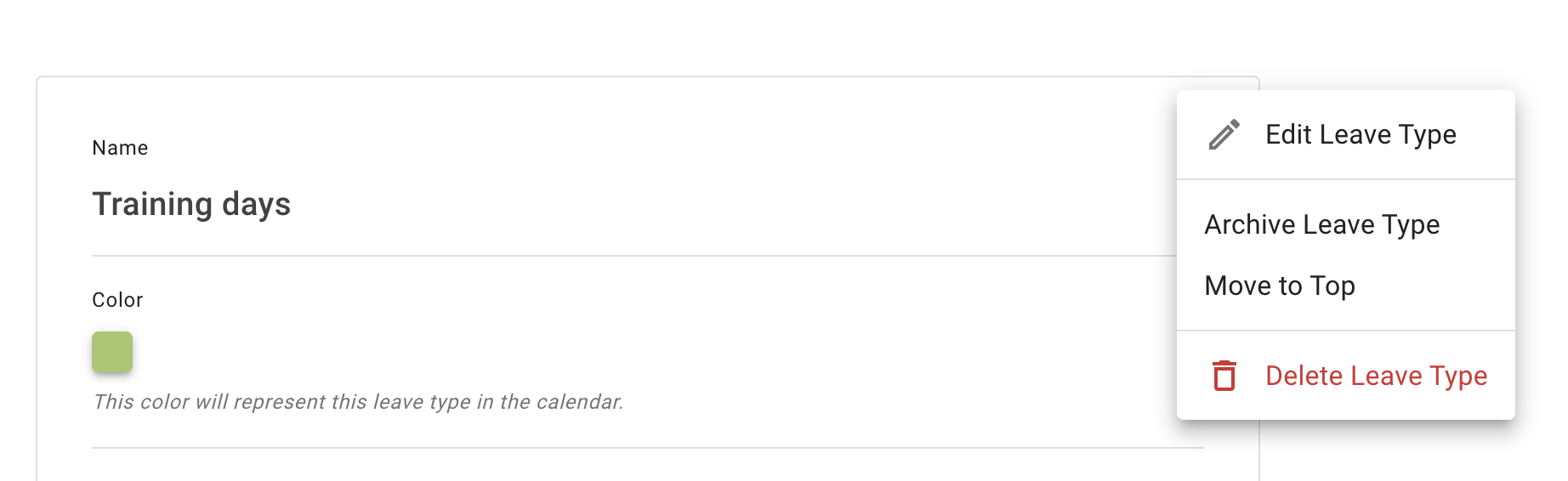
For each leave type, you can:
- edit the leave type
- archive the leave type
- move it to the top of the list
- delete the leave type, if no bookings exist
Edit a leave type
Select Edit leave type to update the leave type settings.
You can change the name, colour, allowance effect, auto approval, limit, and advance notice.
After making changes, click Save changes.
Archive a leave type
Use Archive leave type when a leave type is no longer needed for new bookings.
Archived leave types cannot be selected by employees when they book leave. Old records stay in the system, so your reports and calendar history remain accurate.
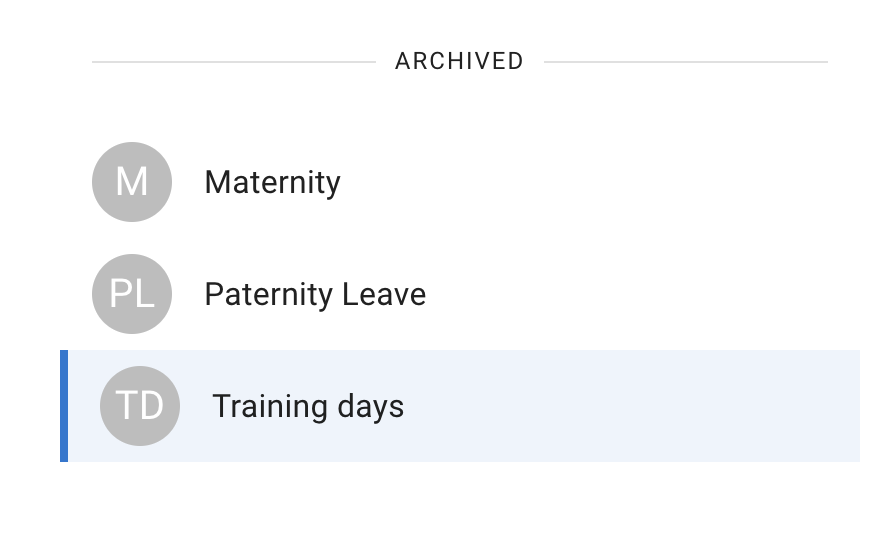
You can restore an archived leave type later.
To restore a leave type:
- Open the archived leave type list.
- Choose the leave type you want to restore.
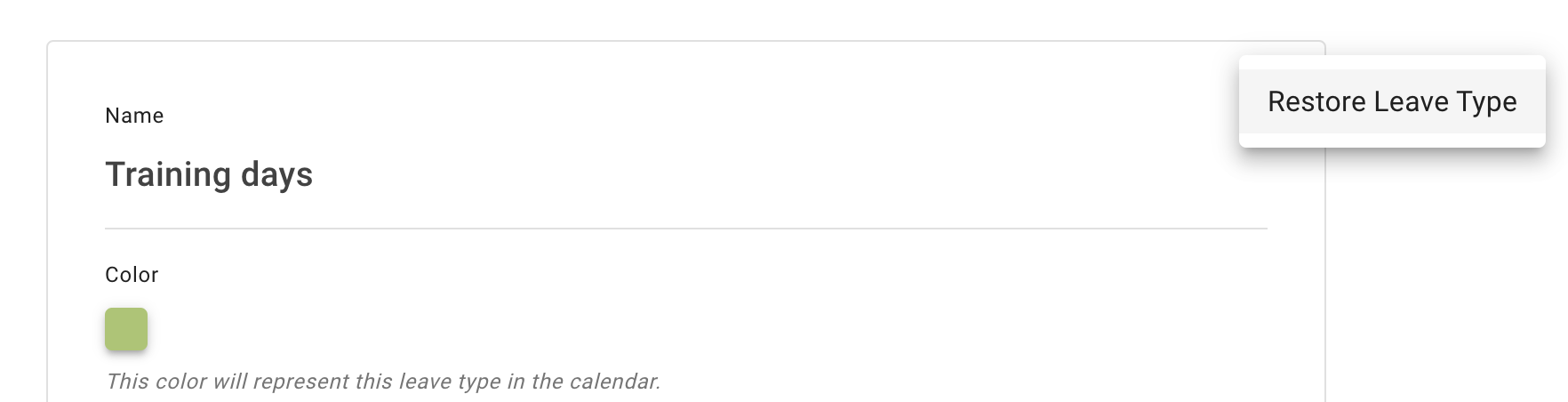
- Open the menu in the top right corner.
- Select Restore leave type.
The leave type will move back to the active list and can be used for new bookings again.
Move a leave type to the top
Use Move to top to change the order employees see when booking leave.
Put the most common leave types first. For example, many companies move Holiday to the top so employees can find it quickly.
Delete a leave type
Use Delete leave type only when you are sure the leave type is no longer needed.
Deleting a leave type is permanent. It cannot be restored.
A leave type can only be deleted if no bookings exist for it. If bookings already exist, the leave type cannot be deleted. In this case, archive it instead.
Best practice
Keep your leave type list simple.
Start with the leave types most employees need, such as holiday and sick leave. Then use Employee policies if certain leave types should only be available to specific departments, locations, or employee groups.
This keeps booking simple for employees and gives managers better control over leave tracking.s